Discover what a professional paintbrush manufacturer should provide—from product development and OEM/ODM customization to sampling, quality control, mass production, and packaging. Learn how Fontainebleau supports brands, wholesalers, and distributors from the first idea to a finished brush line.
When a brand starts developing a new paintbrush, the first question is often simple:
How much does it cost?
But for a successful B2B brush project, price is only one part of the decision.
The more important questions are:
Can the manufacturer help develop the product?
Can they recommend suitable materials?
Can they turn an idea into a workable sample?
Can they maintain consistent quality during mass production?
Can they support customized packaging and future product development?
For art brands, wholesalers, and distributors, choosing the right manufacturing partner can influence everything from product performance and consistency to production efficiency and long-term growth.
So, what should a professional paintbrush manufacturer actually provide?
1. Product Development Should Start Before Production
Not every customer begins with a complete product specification.
Some brands have an existing brush they want to improve. Others have a reference product, a sketch, a target price, or simply an idea for a new brush.
A capable manufacturer should be able to work from different starting points and turn them into a workable product.
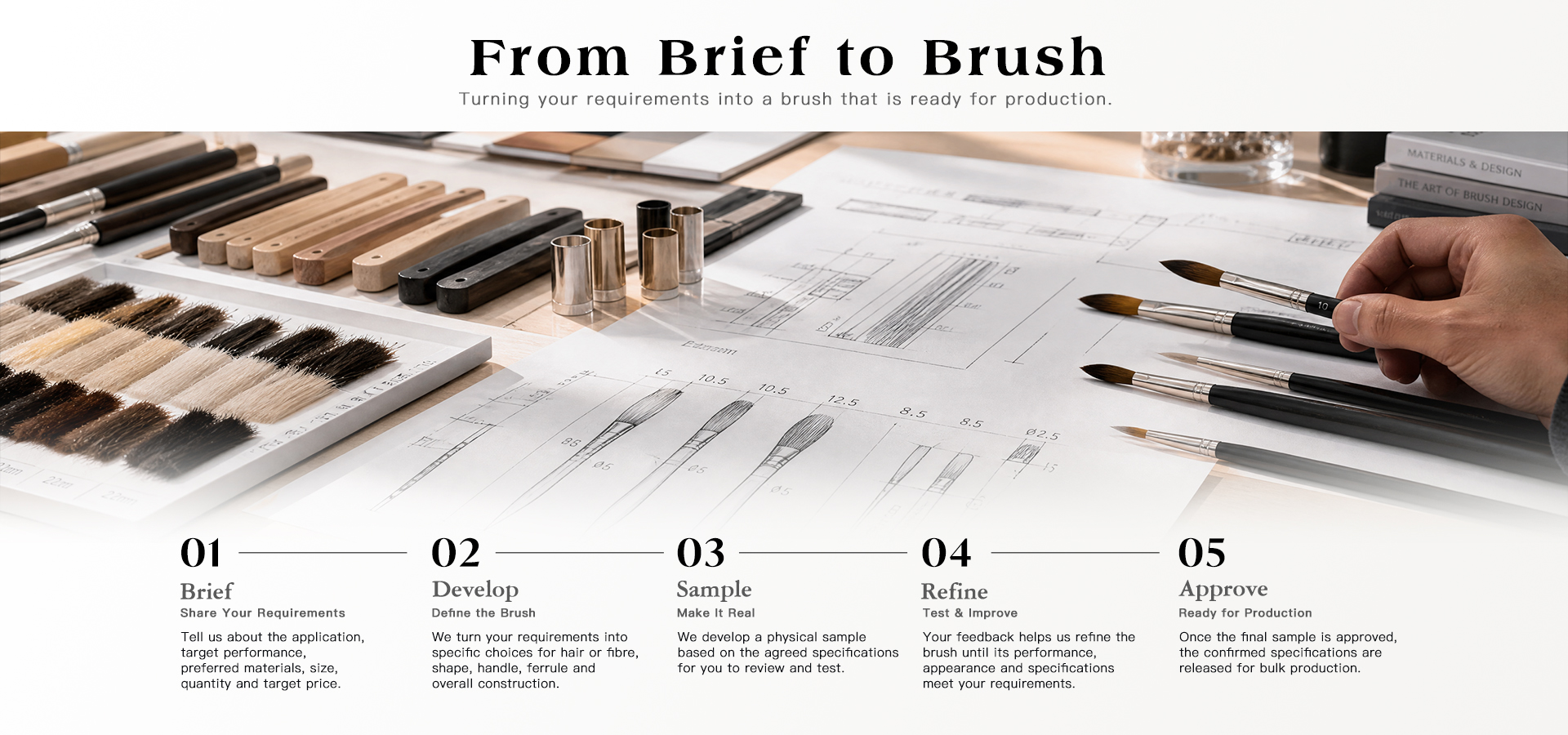
Product development may involve:
- Brush shape and size
- Hair material and blend
- Hair performance
- Handle material and design
- Ferrule specifications
- Brush construction
- Product combinations
- Packaging
This is where manufacturing experience becomes important.
Instead of simply asking, “What do you want us to manufacture?”, a strong manufacturing partner should also understand:
“What does your target user need this brush to do?”
That understanding can lead to a better product from the beginning.
2. Material Selection Should Match the Application
There is no single brush material that is ideal for every application.
Watercolor brushes may require excellent water retention, softness, and a responsive point.
Miniature brushes may require precise control, a sharp point, and reliable spring.
Acrylic and oil brushes can require different levels of firmness, resilience, and durability.
Natural hair and synthetic fibers also offer different performance characteristics.
When developing a brush, the manufacturer should therefore consider the relationship between:
Hair + Shape + Size + Handle + Ferrule + Application
These elements need to work together as one product.
A manufacturer with experience across multiple brush categories can help brands make these decisions during development rather than leaving every technical choice to the buyer.
3. OEM & ODM Should Go Beyond Adding a Logo
For many brands, OEM begins with putting a logo on an existing brush.
But a genuine customized brush project can go much further.
Depending on the project, a brand may customize:
Brush
- Shape
- Size
- Hair material
- Hair blend
- Point
- Firmness
- Construction
Handle
- Wood or metal
- Shape
- Length
- Color
- Surface finish
Ferrule
- Material
- Shape
- Size
- Finish
Branding
- Logo
- Printing
- Engraving
- Color details
Packaging
- Cards
- Boxes
- Tubes
- Bags
- Customized brush sets
For a brand building its own product line, these elements are part of the product—not separate afterthoughts.
This is why OEM/ODM capability should be evaluated based on how much of the product a manufacturer can actually help develop and coordinate.
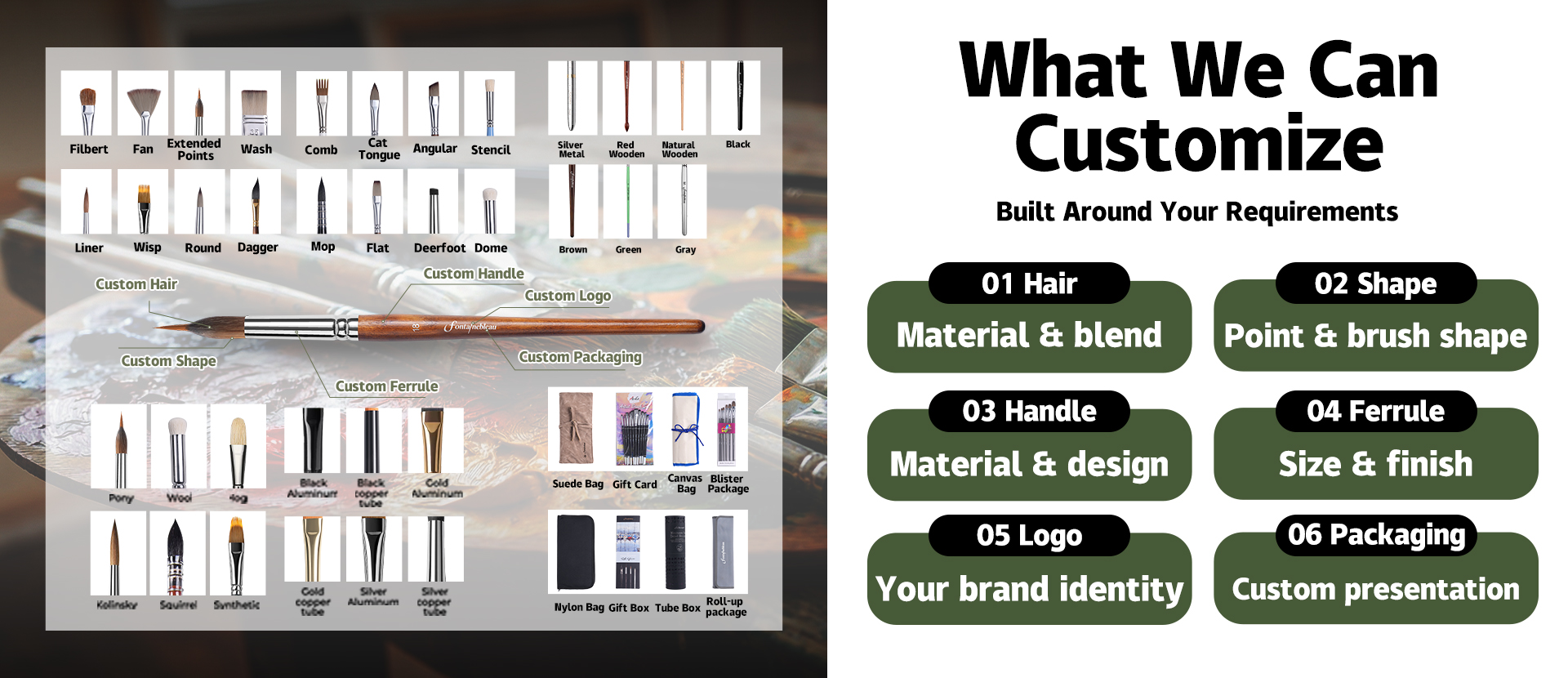
At Fontainebleau, customers can start with their requirements, reference products, or ideas. Our product development and design teams work with them to develop the corresponding brush solution.
4. Sampling Should Be Part of Product Development
A sample is not simply a smaller version of the final order.
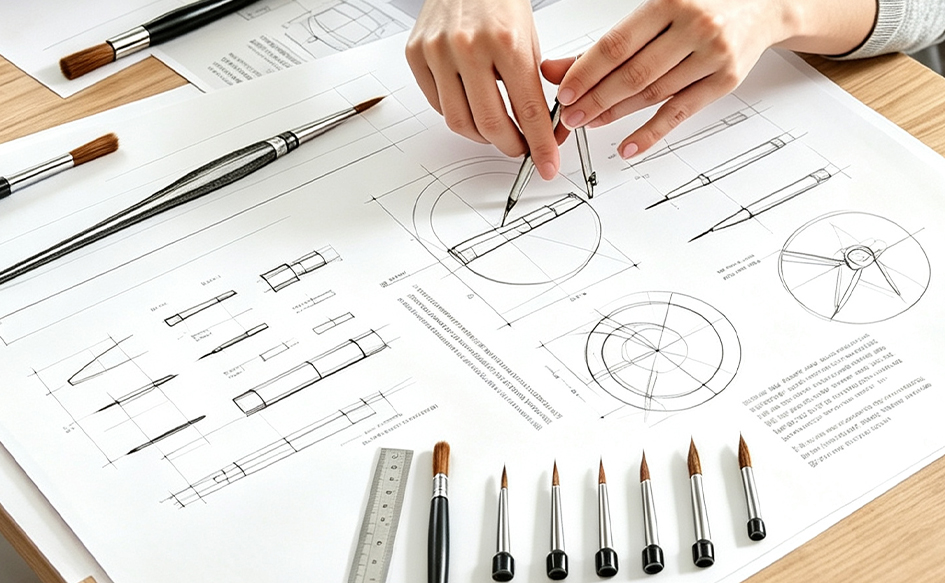
It is the stage where a brand can evaluate whether the product actually meets its expectations.
During sampling, details may need to be adjusted, such as:
- Brush tip shape
- Hair performance
- Brush size
- Handle balance
- Ferrule construction
- Logo position
- Packaging
- Overall appearance
These adjustments are a normal part of customized product development.
The important question is whether the manufacturer can communicate clearly, make the necessary changes, and turn the approved sample into a reliable production specification.
For B2B products, the quality of the development process can be just as important as the final manufacturing process.
5. Quality Control Should Follow the Brush Through Production
Quality control should not begin when finished products are already packed.
For a paintbrush, different stages can affect the final result.
At Fontainebleau, our quality inspection process covers five key stages.
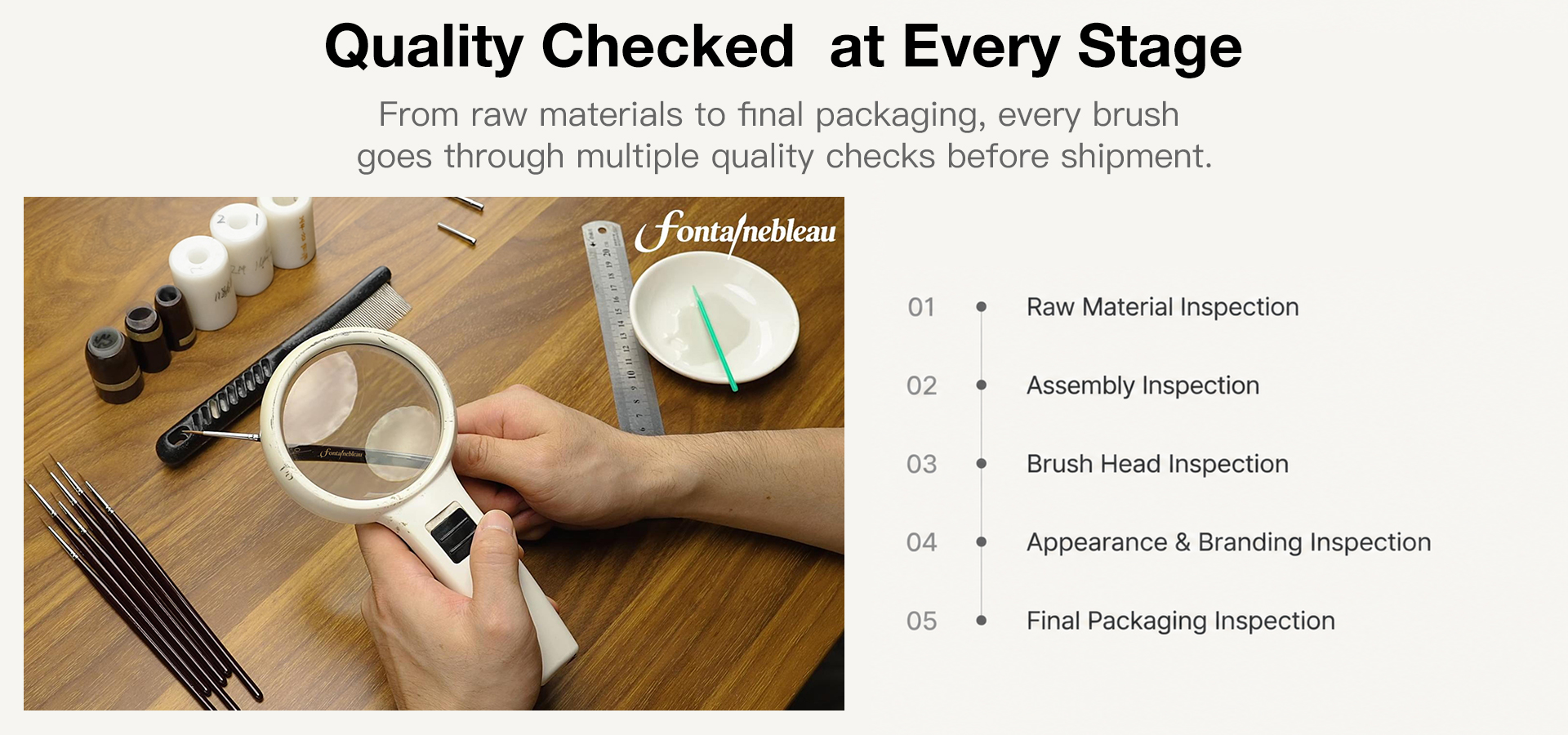
Step 1: Raw Material Inspection
Brush hair, ferrules, handles, and other materials are checked before production.
Step 2: Assembly Inspection
Connections are checked to ensure that components are securely fitted.
Step 3: Brush Tip Inspection
Brush tips are manually checked for proper point formation, shedding, and split hairs.
Step 4: Appearance & Brand Inspection
Logos, surfaces, finishes, and glue application are checked.
Step 5: Final Packaging Inspection
Packaging condition, markings, and final presentation are checked before shipment.
For B2B customers, this matters because one good sample is not enough.
The real test is whether the same product can remain consistent across repeated production batches.
6. Manufacturing Capability Is About More Than Factory Size
When evaluating a manufacturer, it is natural to ask:
“How big is your factory?”
But factory size alone does not tell you whether a manufacturer is suitable for your project.
More important questions include:
- Does the manufacturer have experience with your product category?
- Can it handle customized products?
- Can it maintain consistency between batches?
- Can it support your expected order volume?
- Does it have the people and processes needed for your project?
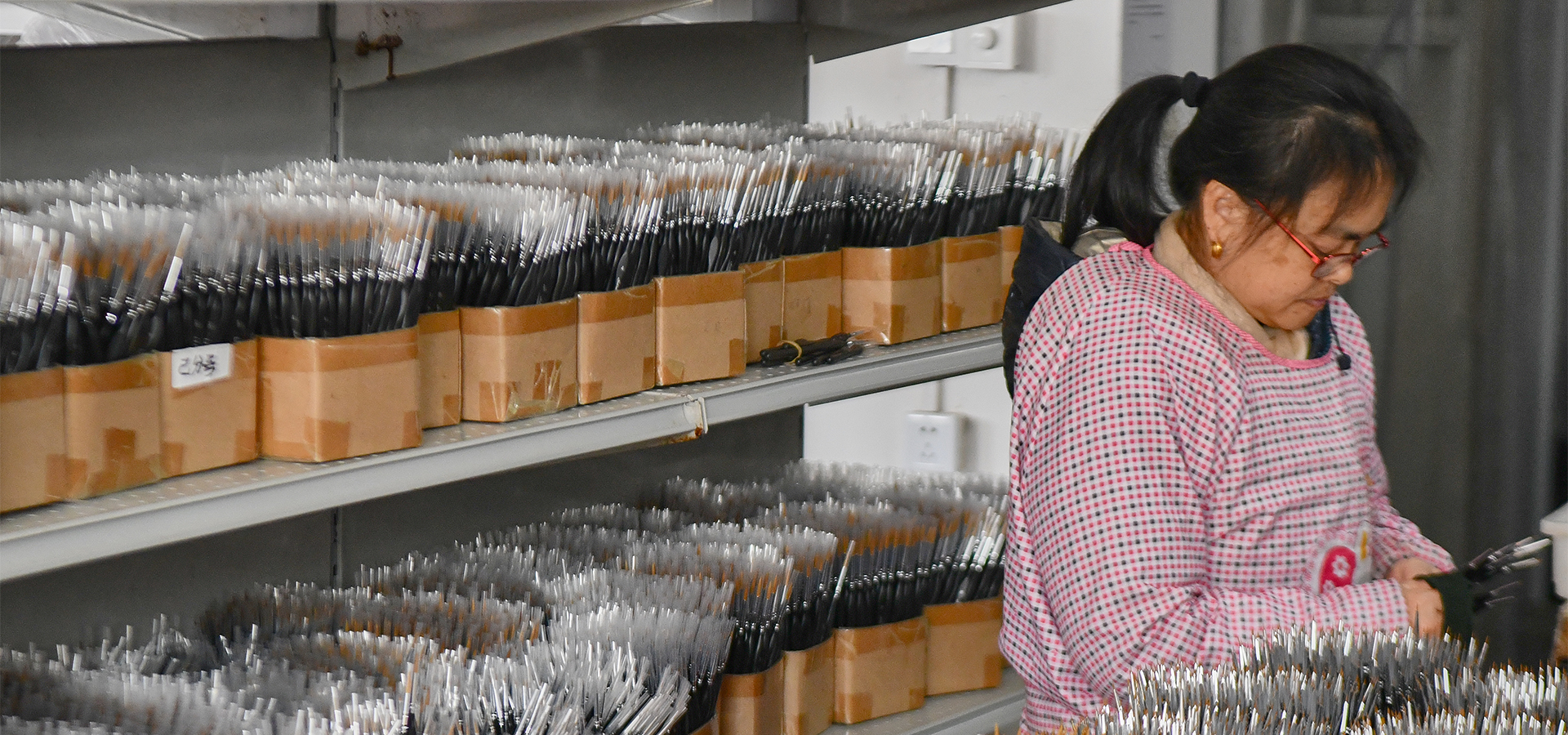
Paintbrush manufacturing combines machine-assisted processes with skilled manual work.
Many important details require experienced workers, particularly during brush forming, shaping, finishing, assembly, and inspection.
At Fontainebleau, manufacturing combines machine-assisted processes with extensive manual craftsmanship and quality inspection.
The goal is not simply to produce more brushes.
It is to produce the right brushes consistently.
7. A Strong Manufacturer Should Support Product-Line Development
Your first brush may be only the beginning.
A brand may start with one product and later develop:
- Additional sizes
- New brush shapes
- Different hair materials
- Professional brush sets
- Travel collections
- New painting categories
- Customized packaging
- Complete brush collections
This is why it is worth evaluating a manufacturer's product development range, not just its current catalog.
Fontainebleau develops and manufactures brushes for applications including:
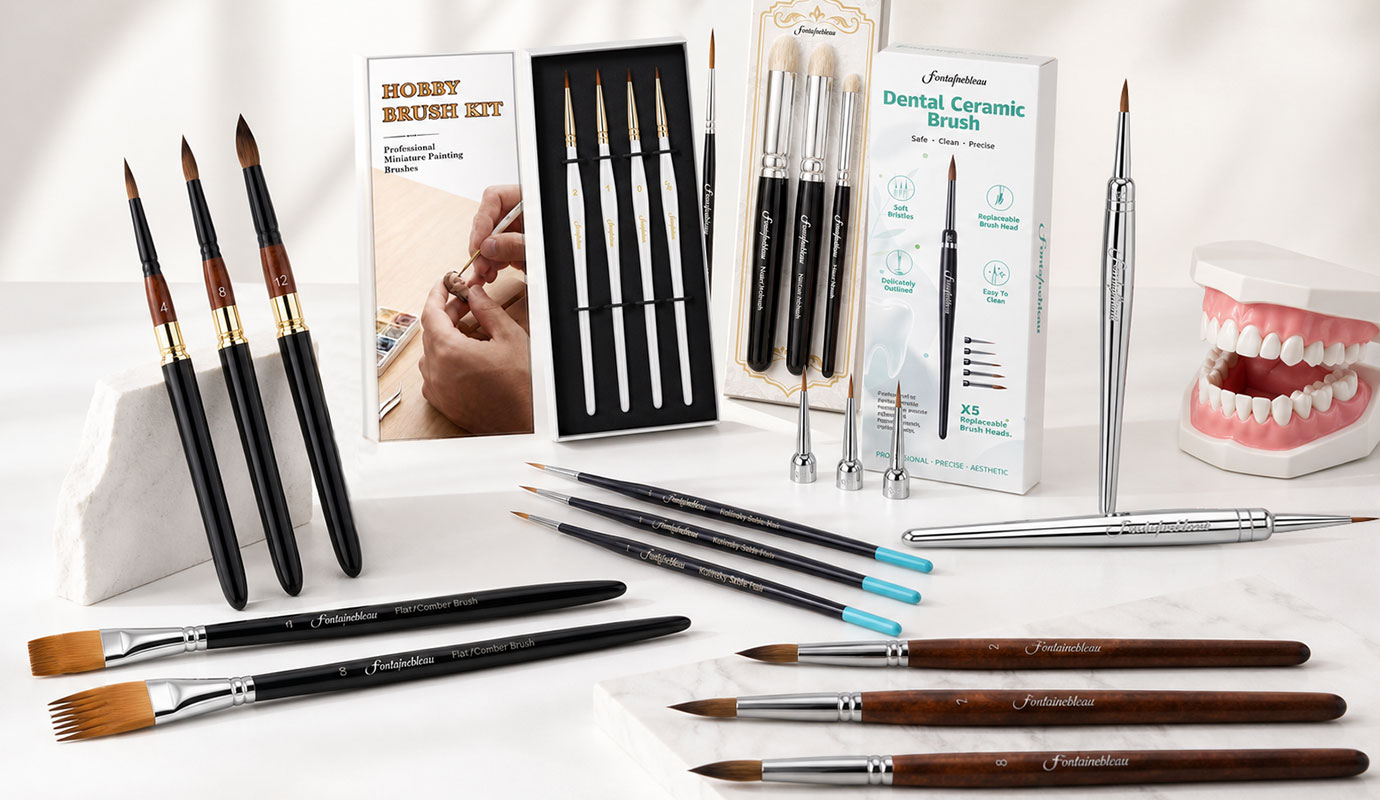
- Watercolor
- Acrylic
- Oil painting
- Miniature painting
- Detail painting
This broader product capability allows brands, wholesalers, and distributors to develop and expand their brush collections with the same manufacturing partner.
8. Design Support Can Connect the Product With Your Brand
Product development does not end when the brush is finished.
For many brands, packaging and visual presentation are also part of the product.
A manufacturer with in-house design capability can support areas such as:
- Logo application
- Packaging design
- Product presentation
- Product photography
- Short product videos
- Customized brush sets
Fontainebleau has an in-house design team supporting OEM/ODM projects.
This allows product development and visual presentation to be coordinated as part of the same project.
For brands developing a new collection, having these capabilities available through one manufacturing partner can simplify communication and reduce the need to coordinate multiple suppliers.
9. Clear Communication Is Part of a Successful Manufacturing Process
A customized brush project can involve dozens of small decisions.
Hair material.
Brush size.
Handle color.
Logo position.
Packaging dimensions.
Sample adjustments.
Production specifications.
If these details are not communicated clearly, small issues can become production problems.
Before starting a project, B2B buyers should be able to get clear information about:
- Product specifications
- Material options
- Samples
- MOQ
- Pricing
- Production schedules
- Quality requirements
- Packaging
- Shipping
A good manufacturing relationship should reduce uncertainty throughout the project.
You should know what is being developed, what has been approved, and what will be delivered.
10. Choose a Manufacturer That Can Grow With Your Brand
A supplier may be able to manufacture your first brush.
But can they support your second product?
Your fifth?
Your next collection?
This is an important question for growing brands.
As your business develops, you may need new brush shapes, materials, sizes, packaging, or entirely new product categories.
A long-term manufacturing partner should be able to evolve with your requirements rather than requiring you to find a new supplier every time your product strategy changes.
The goal is not simply to complete the first order.
It is to build a manufacturing relationship that can support the next stage of your brand.
What a Complete B2B Brush Manufacturing Partnership Looks Like
For a brand, a complete manufacturing process can look like this:
Product Idea
↓
Material & Structure Development
↓
OEM/ODM Customization
↓
Sampling & Refinement
↓
Quality Inspection
↓
Mass Production
↓
Customized Packaging
↓
Future Product Development
The value is not simply having one factory produce one order.
It is having a manufacturing system that can support the entire journey.
How Fontainebleau Supports B2B Brush Projects
Fontainebleau was established in 2008 and specializes in the development, manufacturing, and export of paintbrushes.
Today, we serve more than 1,500 customers across 100+ countries, including art brands, wholesalers, distributors, studios, and other B2B customers.
Our capabilities cover:
Product Development
Developing brush solutions based on customer requirements, reference products, and ideas.
OEM/ODM Customization
Supporting customized brush materials, shapes, handles, ferrules, branding, and packaging.
Design Support
An in-house design team supports product and packaging development.
Manufacturing
Combining skilled manual craftsmanship with machine-assisted processes.
Quality Control
Five key inspection stages covering materials, assembly, brush tips, appearance, branding, and packaging.
Product Range
From watercolor and acrylic brushes to oil, miniature, and detail brushes.
For us, manufacturing does not begin when a purchase order arrives.
It begins when we understand what the customer is trying to build.
Whether you already have a detailed specification or are starting with a product idea, the goal is the same:
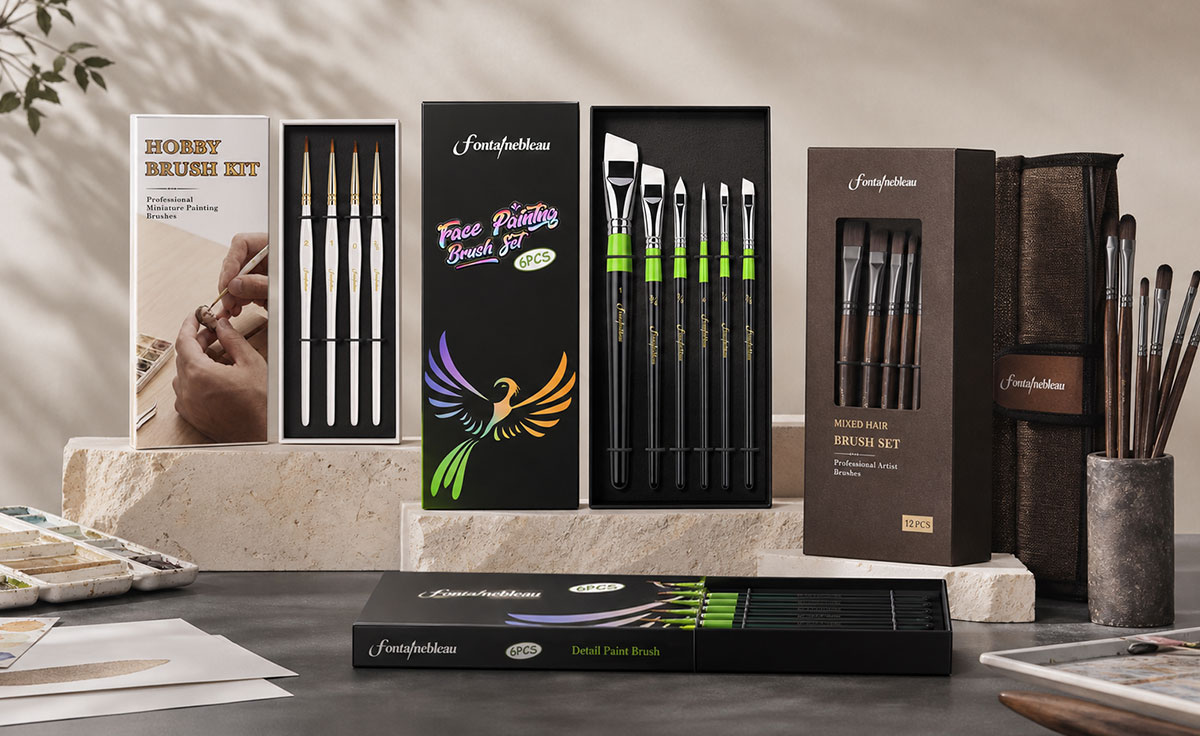
Turn that idea into a brush that can be sampled, refined, produced consistently, and developed into a complete product line.
The Right Manufacturer Should Help You Build, Not Just Buy
A competitive price can help you place an order.
But product development capability, material expertise, quality control, customization, communication, and long-term production support determine what happens after that order.
For brands building their own brush collections, the right manufacturing partner should be able to move with you—from the first idea to the finished product, and from the first SKU to the next stage of growth.
That is the difference between simply buying paintbrushes and building a brush line with a manufacturing partner.

